

How to Manage Cradle Cap Gently with a Wooden Brush
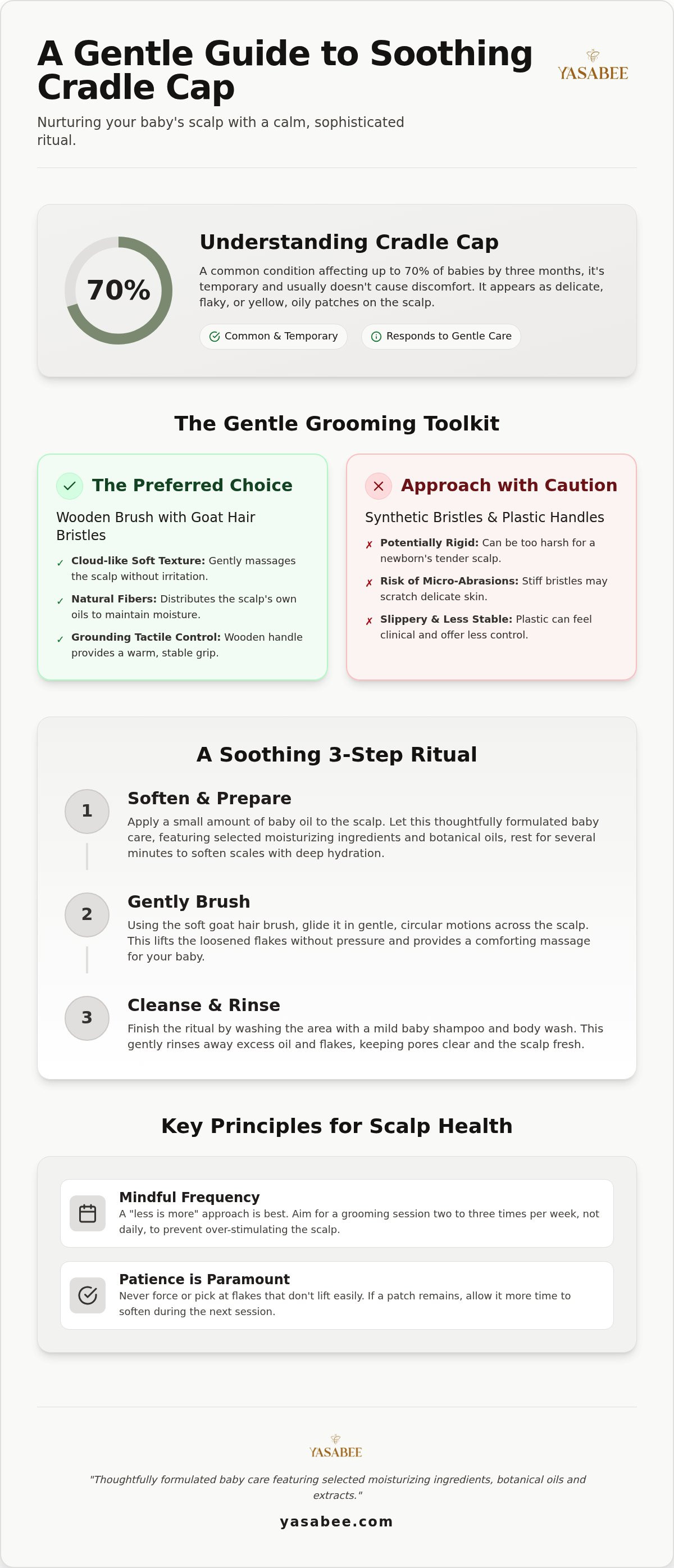
Last night, while smoothing a blanket over your sleeping infant, you noticed the first delicate, flaky patches of cradle cap. It’s a common sight, affecting up to 70% of babies by three months old, yet the instinct to protect their soft skin brings a wave of uncertainty. You might feel a nervous urge to pick at the scales or worry that a standard baby brush for cradle cap might be too abrasive for such a precious scalp. It’s natural to seek a path that prioritizes both efficacy and tenderness.
This guide promises to replace that worry with a soothing, sophisticated ritual. To nurture your baby’s comfort while gently clearing the scalp, using high-quality tools with soft goat hair bristles is essential. We’ll explore how to integrate thoughtfully formulated baby care featuring selected moisturizing ingredients, botanical oils and extracts into your routine. You’ll learn the art of a rhythmic, gentle exfoliation that leaves your little one’s scalp clear and their spirit comforted.
Key Takeaways
- Understand that cradle cap is a common, temporary condition that responds best to a calm and methodical approach during your baby's grooming routine.
- Discover how to soften scales effectively using thoughtfully formulated baby care featuring selected moisturizing ingredients, botanical oils and extracts before you begin brushing.
- Learn why a high-quality baby brush for cradle cap made with soft goat hair is the preferred choice for protecting your infant's delicate soft spot.
- Elevate your daily care into a sophisticated bonding ritual by choosing wooden grooming tools that offer superior tactile control and lasting quality.
Understanding Your Newborn’s Delicate Scalp and Cradle Cap
Cradle cap, or infantile seborrheic dermatitis, often appears as yellow, oily patches on a newborn’s head. While it might look concerning, it’s a temporary phase that doesn't cause your baby discomfort. For a comprehensive overview of cradle cap, medical sources confirm it usually resolves on its own without medical intervention. However, managing it requires a light touch. Your baby’s scalp is exceptionally delicate, particularly around the fontanelle, or soft spot. This area requires protection and a specialized approach that prioritizes comfort over aggressive scrubbing. It's a time for patience and high-quality materials.
Using a baby brush for cradle cap isn't about forced removal. Instead, it’s a method of gentle stimulation to encourage natural healing. This phase responds best to thoughtfully formulated baby care featuring selected moisturizing ingredients, botanical oils and extracts. These elements work in harmony with the skin, softening the crusts so they can be lifted away with the lightest pressure. By focusing on hydration first, you ensure the grooming process remains a soothing experience rather than a source of irritation for your little one.
The Anatomy of a Gentle Grooming Tool
Synthetic bristles can sometimes be too rigid, risking micro-abrasions on tender skin. In contrast, soft goat hair bristles offer a cloud-like texture that gently massages the scalp. These natural fibers are uniquely capable of distributing the scalp’s own oils, maintaining a healthy moisture balance. Choosing a wooden baby brush comb set ensures you have the gold standard for infant hair care. The natural materials provide a grounding, sensory experience that turns a necessary task into a moment of pure, quiet luxury. It's an investment in both your baby’s comfort and the peaceful rhythm of your nursery.
A Soothing Ritual: Using Your Baby Brush for Cradle Cap Effectively
Transforming a clinical task into a quiet moment of connection makes all the difference for your little one. To begin, apply a small amount of Yasabee Baby Body, Hair and Scalp Oil to the affected areas. This thoughtfully formulated baby care featuring selected moisturizing ingredients, botanical oils and extracts works to soften the sebum-bound scales without friction. Let these botanical oils rest on the scalp for several minutes. This deliberate pause allows for deep hydration, ensuring the flakes are ready to lift away naturally during the grooming process.
Once the oils have performed their quiet work, take your soft goat hair brush. Using gentle, circular motions, glide the baby brush for cradle cap across the scalp to encourage the scales to release. The soft bristles provide a soothing massage while lifting the loosened debris with minimal pressure. For more detailed guidance, the Mayo Clinic offers trusted home care tips for cradle cap that emphasize this soft-touch methodology. Finish the ritual by cleansing the area with a mild baby shampoo and body wash to rinse away excess oil and keep the pores clear.
Best Practices for Scalp Health
Consistency is helpful, but over-grooming can stimulate the sebaceous glands to produce more oil. Aim for a frequency of two to three times per week rather than daily sessions. A "less is more" philosophy ensures the infant's skin barrier remains undisturbed and prevents unnecessary redness. Most importantly, never force or pick at flakes that remain attached to the scalp. If a patch doesn't lift with gentle brushing, simply allow it more time to soften during your next session. This patient approach builds a foundation of trust and comfort for your baby.
Why a Wooden Brush and Comb Set is the Sophisticated Choice
Choosing a wooden handle over plastic or silicone isn't just an aesthetic preference. It's about the weight and warmth in your hand. Plastic can feel slippery or clinical, whereas wood provides a grounding, tactile experience that improves parental control. When you're working near your baby's soft spot, that stability is essential. This choice transforms a routine task into a moment of quiet luxury. It contributes to a peaceful, sensory nursery environment where every object is selected with deep respect for craftsmanship.
A wooden grooming set for infants serves as a lasting keepsake, bridging the gap between functional tool and family heirloom. The NHS highlights gentle management techniques as the foundation for clearing scales safely. By selecting a high-quality baby brush for cradle cap, you align with these expert recommendations while embracing a sophisticated, boutique persona. This ritual works best when paired with thoughtfully formulated baby care featuring selected moisturizing ingredients, botanical oils and extracts. It's a holistic approach to wellness that feels both exclusive and welcoming.
Maintaining Your Grooming Essentials
To ensure your tools remain baby grooming kit essentials, proper care is vital. Clean the soft goat hair bristles by gently swirling them in warm water with a drop of mild shampoo. Avoid soaking the wooden handle to prevent warping; instead, wipe the wood with a damp cloth and dry it immediately. This unhurried maintenance preserves the high level of quality in your tools. It allows them to remain a reliable source of comfort throughout your child's early years.
Embracing a Calmer Way to Care for Your Baby's Scalp
Managing cradle cap doesn't have to be a source of anxiety. By shifting to a rhythmic, nourishing ritual, you protect your infant's delicate skin while fostering a deeper bond. The synergy between botanical oils and a high-quality baby brush for cradle cap allows you to lift scales without force. This approach respects the sensitivity of the fontanelle and maintains a healthy moisture balance. It works beautifully.
Featured in the Yasabee Luxury Baby Gift Collection, the Wooden Brush & Comb Set uses soft goat hair bristles for the most tender care. These tools are designed to work with thoughtfully formulated baby care featuring selected moisturizing ingredients, botanical oils and extracts. Discover the Yasabee Wooden Brush & Comb Set for Gentle Scalp Care to elevate your nursery routine. Trust in the quiet luxury of natural materials as you navigate these early milestones with confidence.
Frequently Asked Questions
Is it okay to brush my baby’s hair if they have cradle cap?
Yes, brushing is a gentle and effective way to manage cradle cap when you use the right tools. Using a soft baby brush for cradle cap helps to loosen existing scales and clear away debris without irritating the skin. It’s a soothing ritual that supports scalp health, provided you move with care around the delicate fontanelle and avoid any aggressive scrubbing.
How often should I use a cradle cap brush on my newborn?
You should aim to use a grooming brush two to three times per week rather than daily. Over-brushing can sometimes stimulate the oil glands, which may lead to further buildup. By maintaining a methodical, unhurried schedule, you allow the scalp to heal naturally while ensuring the skin barrier remains protected and undisturbed during this temporary phase of infancy.
What kind of oil is best to use with a wooden baby brush?
A moisturizing agent featuring botanical oils is the ideal companion for your wooden brush. Yasabee Baby Body, Hair and Scalp Oil is thoughtfully formulated baby care featuring selected moisturizing ingredients, botanical oils and extracts. These oils penetrate the crusts, making them easier to lift away. Applying the oil several minutes before brushing ensures a smooth, sensory experience that deeply hydrates the newborn scalp.
Can cradle cap be prevented with regular brushing?
While cradle cap is often linked to hormones and overactive oil glands rather than hygiene, regular brushing helps manage its appearance. Using a baby brush for cradle cap can help clear away excess oils and dead skin cells before they form thick crusts. This consistent attention keeps the scalp clear and healthy, turning a common condition into an opportunity for quiet bonding and care.