

How to Use a Silicone Finger Toothbrush for Your Baby
What if your baby's first tooth wasn't a source of stress, but an invitation to a new, quiet moment of connection? Many parents feel a flutter of anxiety when that first tiny pearl appears, wondering how to use silicone finger toothbrush for baby hygiene without causing discomfort. It's natural to feel uncertain about when to begin or how to manage a squirming infant during these delicate early stages of care.
You can transform this daily necessity into a soothing ritual by mastering the art of infant oral hygiene with confidence and grace. We'll explore a nurturing, step-by-step approach that prioritizes both safety and emotional bonding. This guide prepares you to support your child's healthy development with a sense of quiet luxury and intentionality, mirroring the care found in thoughtfully formulated baby care featuring selected moisturizing ingredients, botanical oils and extracts.
Key Takeaways
- Establish a foundation for lifelong health by introducing oral hygiene before the first tooth appears to gently clear bacteria from your infant's gums.
- Master the graceful technique of how to use silicone finger toothbrush for baby by securing the tool on a moistened index finger and cradling your little one in a calm, reclined position.
- Utilize the dual-textured design of the brush to offer sensory comfort and soothing relief for tender, inflamed gums during the teething journey.
- Maintain the purity and efficacy of your grooming ritual by replacing the silicone brush every three to four months or at the first signs of wear and discoloration.
The Role of a Silicone Finger Toothbrush in Early Hygiene
A silicone finger toothbrush is a soft, BPA-free tool designed to fit snugly over a parent's index finger, providing a gentle touch for a baby's delicate mouth. While many parents wait for the first tooth to emerge, oral hygiene should ideally begin well before then to clear bacteria from the gums. This early exposure offers significant sensory benefits by desensitizing the mouth, making future transitions to traditional brushes much smoother. By integrating this practice into your daily life, you are following principles found in Pediatric dentistry that emphasize early intervention for long-term health. Understanding how to use silicone finger toothbrush for baby hygiene ensures you are providing the best start for their smile while creating a foundational bonding moment through touch.
When to Introduce the Finger Toothbrush
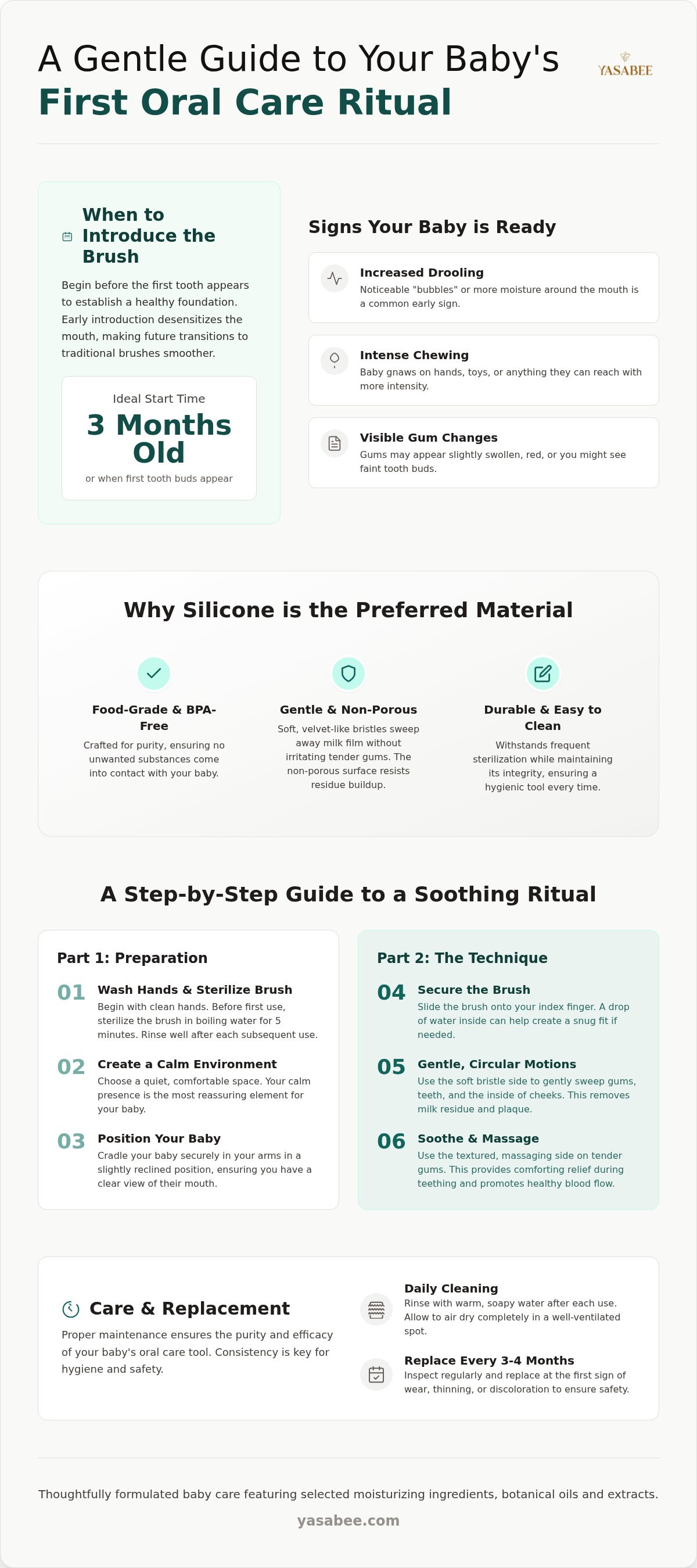
Most experts suggest starting as early as three months or when you see the first hints of tooth buds beneath the surface. You might notice your little one displaying specific signals that they are ready for oral stimulation:
- Increased drooling or "bubbles" at the mouth
- Chewing on hands or toys with intensity
- Swollen or slightly red areas on the gums
Consistency in your daily routine is vital. A steady rhythm after morning feeds and before bed turns a necessary hygiene task into a comforting, predictable habit that your child will grow to expect. It's about building trust as much as it's about cleanliness.
Why Silicone is the Preferred Material
Food-grade silicone is naturally non-porous, ensuring it stays clean and resists the buildup of unwanted residues. Unlike traditional nylon bristles that can feel abrasive on tender infant gums, silicone bristles offer a velvet-like texture that gently sweeps away milk film. This material is exceptionally durable and withstands frequent sterilization, maintaining its integrity over time. This high standard of care perfectly complements a lifestyle focused on quality, similar to choosing thoughtfully formulated baby care featuring selected moisturizing ingredients, botanical oils and extracts.
Preparing for a Calm and Safe Brushing Ritual
Creating a sanctuary for your baby’s hygiene begins long before the brush touches their gums. Start by cleansing your own hands to maintain the highest standards of purity for your little one. Select a corner of your home that feels peaceful, ideally one bathed in soft, natural light and shielded from the hum of household distractions. Before you begin, carefully examine the tool for any subtle signs of wear, such as thinning silicone or tiny tears. Engaging in a few moments of "warm-up" play allows your infant to explore the texture of the bristles with their hands, turning the process of learning how to use silicone finger toothbrush for baby care into a delightful sensory discovery. This intentionality is the secret to mastering how to use silicone finger toothbrush for baby routines with ease.
Cleaning and Sterilizing Your Brush
To prepare the brush for its inaugural use, submerge it in boiling water or a steam sterilizer for five minutes to ensure it is perfectly pristine. For daily upkeep, a simple rinse with warm, soapy water effectively removes milk film and keeps the material supple. It is essential to let the brush air dry in a well-ventilated area to ensure no moisture remains trapped inside the finger sleeve.
Creating the Emotional Connection
Your presence is the most reassuring element of this ritual. Use a melodic, hushed voice and maintain soft eye contact to build a bridge of trust between you and your infant. This practice of oral care flows beautifully alongside other gentle grooming habits, such as using a wooden baby brush comb set to massage their scalp after a bath. Each step of the routine reflects a dedication to high-quality care, much like choosing thoughtfully formulated baby care featuring selected moisturizing ingredients, botanical oils and extracts to protect their delicate skin.
Step-by-Step Guide: How to Use a Silicone Finger Toothbrush
Begin by sliding the Silicone Finger Toothbrush onto your index finger. If the fit feels loose, a tiny drop of water on your skin creates the necessary surface tension to keep the tool secure. Cradle your baby in your arms, leaning them back slightly so you have a clear, well-lit view of their mouth. With a gentle hand, lift the lip to reveal the gums or those first precious teeth. Learning how to use silicone finger toothbrush for baby hygiene involves using soft, circular motions to sweep away debris while offering a comforting massage. Remember to glide the bristles over the insides of the cheeks, where milk residue often lingers.
Perfecting the Grip and Motion
A secure grip is essential for a peaceful experience. You don't need significant pressure; the soft silicone bristles are designed to do the work with a light, rhythmic touch. If your little one instinctively chomps down, don't pull away. Simply wait for the bite reflex to pass, maintaining a calm presence until they relax their jaw again. This steady approach builds a sense of stability and reliability for your child during their grooming routine.
Addressing the Back Gums and Tongue
Reach the back of the mouth by following the line of the jaw with a steady, unhurried pace. Cleaning the tongue is a vital step to clear away milk residue that can lead to "milk breath" and bacterial growth. This final sweep ensures the entire mouth feels fresh and cared for. A complete, thorough session typically lasts between one and two minutes, providing ample time for both hygiene and bonding.
Soothing Teething Discomfort with Targeted Massage
Beyond its role in hygiene, the Silicone Finger Toothbrush serves as a therapeutic companion during the often-restless teething phase. Its dual-sided design offers a thoughtful balance between function and sensory comfort. While the soft bristles sweep away debris, the textured bumps on the reverse side are specifically crafted to soothe inflamed gum tissue. When you master how to use silicone finger toothbrush for baby care in this therapeutic way, you provide a gentle counter-pressure that encourages healthy blood flow and aids in the natural eruption of new teeth. For an extra layer of relief, place the brush in the refrigerator for a few minutes; the cool silicone provides a quiet, numbing effect that calms a frustrated infant without the harshness of frozen materials.
Identifying Teething Hotspots
You'll likely notice increased drooling, mild fussiness, or visible swelling along the gum ridges as new teeth begin their journey. Focus your massage on these specific hotspots where the pressure is most intense. It's helpful to distinguish between "cleaning mode" using the bristles and "soothing mode" using the textured side. This dual approach ensures your ritual remains both effective and deeply comforting, addressing your baby's physical needs with intentionality and grace.
Safe Pressure for Sore Mouths
Gauging your baby's reaction is key to a successful session. Look for signs of relaxation or a leaning-in motion, which suggests the pressure is just right. Unlike hard plastic teethers that can be unforgiving, the yielding nature of food-grade silicone offers a safer, more responsive alternative for delicate mouths. To enhance this peaceful experience, consider pairing your routine with natural baby skincare products. Using thoughtfully formulated baby care featuring selected moisturizing ingredients, botanical oils and extracts alongside your massage creates a holistic environment of care that supports your child's well-being.
Maintenance and Evolving Your Baby's Oral Care
To preserve the exquisite integrity of your infant’s hygiene, a regular replacement schedule is essential. Typically, you should replace the brush every three to four months, or immediately following any seasonal illness to ensure a pristine environment for their developing smile. Vigilance is key; look for subtle signs of wear such as slight discoloration, tiny tears, or a noticeable thinning of the silicone material. Maintaining this standard ensures you continue to provide the highest level of care when practicing how to use silicone finger toothbrush for baby routines, keeping the experience as fresh and effective as the day it began.
Storage Solutions for Hygiene
Proper storage is a quiet but vital component of early oral care. Storing the brush upright in a dedicated case prevents contamination from surrounding surfaces and allows for proper air circulation. It's wise to keep the infant’s tool separate from adult toothbrushes to maintain a sanctuary of purity within the bathroom. When traveling, a breathable case ensures the routine remains unhurried and hygienic, allowing you to carry the comfort and stability of home wherever your journey takes you.
Transitioning to a Handled Toothbrush
As your little one reaches the milestone of having four to six teeth, or nears their first birthday, the journey naturally evolves. This is a graceful time to introduce the concept of a handled brush. While you might let them hold the brush to explore and encourage a sense of independence, maintaining parent control ensures every surface is thoroughly cleaned. This progression is a natural companion to a complete grooming lifestyle, which includes hair and skin care. Much like using thoughtfully formulated baby care featuring selected moisturizing ingredients, botanical oils and extracts, this transition reflects a deep respect for your child's delicate growth and your role as their protector. Embracing this gentle ritual mindset as they grow fosters a lifelong relationship with health and intentional self-care.
Cultivating a Lifetime of Radiant Smiles
Embracing the art of infant hygiene turns a simple daily task into a profound moment of connection and trust. By mastering how to use silicone finger toothbrush for baby care, you've gained the confidence to support your little one's healthy development with a gentle, nurturing touch. This foundational ritual, focused on soothing massage and meticulous cleanliness, ensures your baby feels secure as they transition through each new milestone. Our Silicone Finger Toothbrush is crafted from BPA-free medical grade silicone and designed for gentle gum massage, making it a natural companion to our sophisticated Luxury Baby Gift Collection. We invite you to discover the Yasabee Silicone Finger Toothbrush for your baby's first ritual and experience the quiet luxury of our thoughtfully formulated baby care featuring selected moisturizing ingredients, botanical oils and extracts. Your dedication today builds a beautiful, healthy future for your child’s smile.
Frequently Asked Questions
Do I need to use toothpaste with a silicone finger toothbrush?
You should begin using a tiny smear of fluoride toothpaste, about the size of a grain of rice, as soon as the first tooth erupts. Before this milestone, using the brush with plain water is sufficient to clear away milk film. This gentle introduction helps your infant become accustomed to the taste and sensation of oral care without overwhelming their delicate senses.
What should I do if my baby hates having their teeth brushed?
If your little one resists, try turning the ritual into a playful game or singing a soft, melodic song to provide reassurance. You might let them hold a favorite toy or explore the brush with their hands first. Maintaining a calm, unhurried pace is essential; forcing the process can create negative associations, whereas patience builds a foundation of trust and sensory comfort.
How often should I use the finger toothbrush on my infant?
Aim to use the tool twice daily, typically after the first feeding of the morning and right before bedtime. Consistency is the key to establishing a predictable rhythm that your child will eventually expect. Regularly practicing how to use silicone finger toothbrush for baby hygiene ensures that bacteria and milk residues are cleared away promptly, supporting healthy gum development.
Is it safe to let my baby chew on the finger toothbrush?
It is safe for your baby to gently gnaw on the silicone bristles while you are wearing the brush, as this provides soothing relief for tender gums. However, you should never leave the brush alone with your infant as a standalone toy. The tool is designed for guided grooming, and your presence ensures that the experience remains both safe and nurturing for your child.
Can a silicone finger toothbrush be used for toddlers too?
While primarily designed for infants, you can continue using the finger brush for toddlers who still have only a few teeth. However, as more teeth erupt and the child grows, transitioning to a handled brush is recommended for better reach. Many parents find that the finger brush remains a favorite for gentle gum massages even after a traditional toothbrush is introduced into the routine.
How do I know if the finger toothbrush is the right size for my finger?
Most finger brushes are designed with a flexible, universal fit that accommodates a variety of adult finger sizes. If the brush feels a bit snug, simply moisten your finger with a drop of water to help it slide on more easily. A secure fit is vital for maintaining control and ensuring the bristles stay positioned correctly while you are navigating your baby's mouth.
Can I put the silicone finger toothbrush in the dishwasher?
You can typically place the silicone brush on the top rack of your dishwasher for a convenient clean. For a more thorough sterilization that aligns with a high standard of care, submerging the tool in boiling water for five minutes is often preferred. This method ensures any lingering residues are removed, maintaining the purity of the material for your next grooming session.
When is the best time of day to brush my baby's gums?
The most effective times are in the morning after breakfast and in the evening just before sleep. Evening brushing is particularly important because it removes milk sugars that might otherwise sit on the gums overnight. Integrating this into your bedtime routine is a wonderful way to practice how to use silicone finger toothbrush for baby hygiene while signaling that the day is winding down.