

Infant Scalp Oil for Sensitive Skin: How to Choose One
The best infant scalp oil for sensitive skin is one whose ingredients suit your baby and whose use begins with a patch test. Leave the test area for 24 hours, then look for redness, itching, or irritation before applying the oil more broadly. If you’re introducing a new product to your baby’s routine, consult your pediatrician first.
A gentle feel and a simple-looking label can be reassuring, but the ingredient list matters most, especially if your baby has a history of skin reactions. Avoid ingredients your child has reacted to, and introduce any new oil cautiously.
This guide explains what to look for in an oil, how to approach patch testing, and which product cautions and allergy considerations matter. You’ll find a calm, practical way to assess scalp oils and decide when to pause and seek your pediatrician’s advice.
Key Takeaways
- Start with the ingredient list and consider your baby’s known sensitivities before choosing a scalp oil.
- Patch test a new oil and watch the test area for a full 24 hours before broader use.
- Learn how different oils, including coconut and castor, may fit into a sensitive-skin routine.
- Explore Yasabee Baby Body, Hair and Scalp Oil as part of your baby-care options, and consider its ingredients and intended use before applying it.
1. Baby oil and sensitive skin safety
An infant scalp oil for sensitive skin should suit your baby’s needs and have an ingredient list you can assess. Prices vary by product; compare ingredients, intended use, and the amount needed rather than relying on broad label claims. A gentle scalp moisturizer should spread easily, without leaving you needing to apply more than the directions recommend.
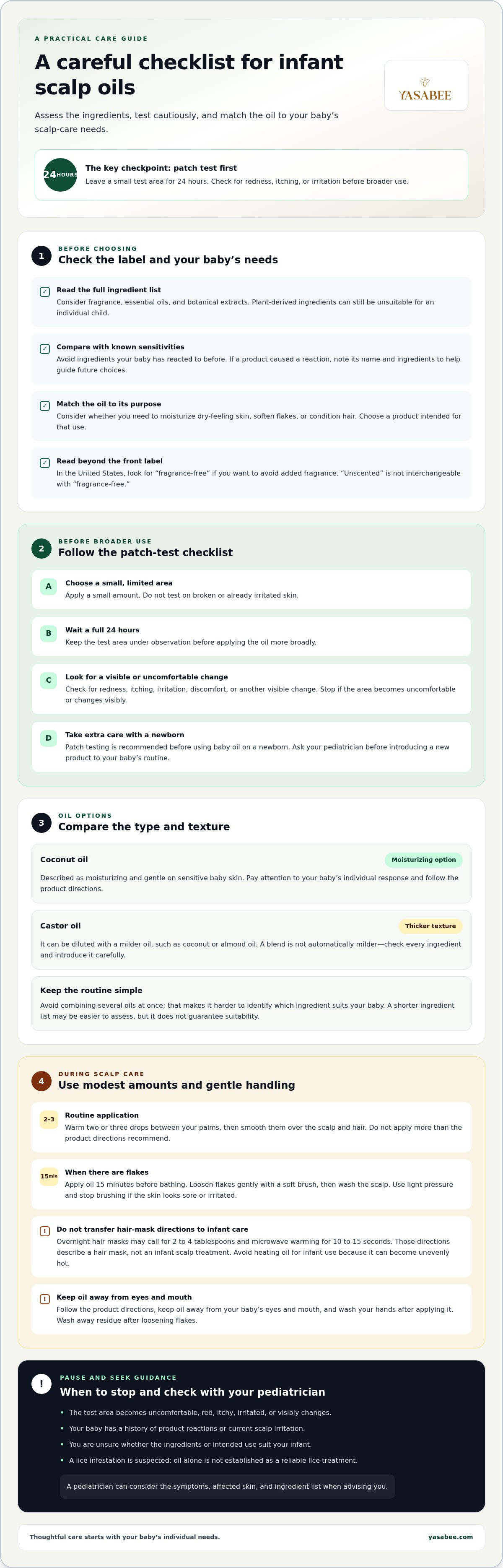
For routine scalp care, warm two or three drops between your palms, then smooth them over the scalp and hair. On flaky days, apply oil 15 minutes before bathing, loosen flakes gently with a soft brush, and wash the scalp. Use light pressure, and stop brushing if the skin looks sore or irritated.
Overnight hair-mask instructions may call for 2 to 4 tablespoons of oil and warming it in a microwave for 10 to 15 seconds. Those directions describe a hair mask, not an infant scalp treatment; don’t transfer them to a baby. Avoid heating oil for infant use, since it can become unevenly hot. Follow the product’s directions and keep oil away from your baby’s eyes and mouth.
Some baby-oil lice-treatment instructions say to leave oil on the scalp and hair for at least 8 hours before washing. That duration doesn’t establish oil as a reliable lice treatment, so don’t treat a suspected infestation with oil alone. For everyday baby scalp and hair care, keep application modest and wash away residue after loosening flakes. If you’re unsure whether a product suits your infant, discuss its ingredients and intended use with your pediatrician.
Costs vary among products. Compare their ingredients, intended purpose, and the amount needed for use.
2. Product cautions and allergies
A baby’s scalp may react to ingredients even when a product is made for infants. Read the full label, including information about fragrance, essential oils, and botanical extracts. Plant-derived ingredients can still be unsuitable for a particular child. If your baby has reacted to a product before, compare its ingredients with the new oil’s label and avoid known triggers.
Fragrance and essential oils can irritate some babies’ sensitive skin. Choose cautiously, and don’t assume a scented or botanical formula will suit every infant. A patch test helps you notice a possible reaction before applying a new oil over the scalp. Apply a small amount to a limited area of skin, then leave it for 24 hours. Check for redness, itching, or irritation before proceeding.
For a newborn, patch testing is recommended before using baby oil. Don’t test on broken or already irritated skin, and stop if the test area becomes uncomfortable or visibly changes. Keep the product away from your baby’s eyes and mouth, and wash your hands after applying it. If a reaction occurs, note the product name and ingredients to help guide future choices.
Ask your pediatrician before introducing a new product to your baby’s skincare routine, particularly if your infant has a history of reactions or current scalp irritation. A pediatrician can consider the symptoms, affected skin, and ingredient list when advising you. For a thoughtful routine, explore baby scalp care options while keeping your baby’s individual sensitivities in mind.
3. Choosing an oil for sensitive skin
Choose an infant scalp oil for sensitive skin by matching its ingredients to your baby’s needs, not by relying on the word “gentle” alone. Read the full ingredient list and consider the oil’s purpose: moisturizing dry areas, softening flakes, or conditioning hair. A shorter list may be easier to assess, but it doesn’t guarantee suitability for every infant. Avoid ingredients your baby has reacted to before.
Coconut oil is described as moisturizing and gentle on sensitive baby skin, making it one option to consider. Still, pay attention to your baby’s individual response and follow the product directions. Castor oil is thicker and can be diluted with a milder oil, such as coconut or almond oil. Don’t assume a blend is automatically milder. Check every ingredient and introduce the chosen product carefully.
In the United States, look for infant scalp oils explicitly labeled fragrance-free if you want to avoid added fragrance. Read the ingredient list as well as the front label, and don’t treat “unscented” as interchangeable with “fragrance-free.” Product labels and formulations differ, so compare ingredients rather than choosing by scent or packaging.
Use a simple decision process: identify the scalp concern, select an oil suited to that purpose, then follow its directions. For dry-feeling skin, consider a moisturizing oil; for flakes, use only a product intended for scalp care. Avoid combining several oils at once, since that makes it harder to identify which ingredient suits your baby. Choose an oil whose ingredients you understand and whose intended use matches your infant’s needs.
Yasabee: Yasabee Luxury Baby Gift Collection
Yasabee’s Luxury Baby Gift Collection brings baby-care essentials together for family use or gifting. For scalp and hair care, Yasabee Baby Body, Hair and Scalp Oil is named for use on the body, hair, and scalp. Yasabee Baby Shampoo & Body Wash is designed for cleansing, while Yasabee Baby Lotion is intended to moisturize the skin.
Choose an item according to the role it serves in your routine, then read its label for the ingredients and directions. This keeps your choice grounded in your baby’s needs rather than broad claims about a formula.
Visit yasabee.com to explore Yasabee’s baby-care offerings.
Make Your Next Choice With Care
Choosing an infant scalp oil for sensitive skin can be part of a thoughtful, unhurried care routine. Let your baby’s needs guide you: keep the routine simple, note which products you use, and watch how the scalp responds. This record can help you discuss a product choice with your pediatrician if questions arise.
Yasabee’s baby-care range includes the Yasabee Luxury Baby Gift Collection, Yasabee Baby Shampoo & Body Wash, and Yasabee Baby Lotion. Explore the offerings and consider which best fits your family’s routine. For questions about Yasabee’s products, contact Yasabee for help. A thoughtful choice begins with attention to your baby, and you can take that next step at your own pace.
Frequently Asked Questions
What oils are safe for an infant’s sensitive scalp?
No single oil suits every infant. Coconut oil is one option described as moisturizing and gentle for sensitive baby skin. Castor oil can be diluted with a milder oil, such as coconut or almond oil. Choose based on the ingredient list and your baby’s scalp needs, and avoid ingredients your baby has reacted to before.
Is coconut oil safe for newborn scalp and cradle cap?
Coconut oil is described as moisturizing and gentle on sensitive baby skin, but that doesn’t mean it will suit every newborn. For cradle cap, oil may help soften flakes so they’re easier to loosen gently. Ask your pediatrician before adding a new product to a newborn’s routine, especially if the scalp is sore or irritated.
Which ingredients should be avoided in infant scalp oils?
Avoid ingredients your infant has reacted to before, and use care with fragrance and essential oils, which can irritate a baby’s scalp. Read the entire ingredient list, not just the front label. If a previous product caused redness, for example, compare its ingredients with the new oil and avoid any known trigger.
How do you patch test oil on an infant’s sensitive skin?
Apply a small amount of the oil to a limited area of your baby’s skin, then leave it for 24 hours before checking. Look for redness, itching, or irritation. Test one new product at a time, and note its name and ingredients. If the skin reacts, discontinue use and share those details with your pediatrician.
Does scalp oil help cradle cap, and what are the risks?
Oil can soften cradle-cap flakes, making them easier to loosen gently before washing. It doesn’t guarantee the condition will clear, and cradle cap commonly resolves on its own. Possible concerns include irritation or a reaction to an ingredient. Avoid picking at attached flakes, and ask your pediatrician about persistent, worsening, or uncomfortable scalp changes.