

Baby Drool Rash on the Chin: Gentle Remedies and When to Seek Help
When saliva repeatedly dampens your baby’s chin, the skin can become red and irritated. A gentle baby drool rash chin remedy often starts with reducing moisture and friction, rather than adding several products to the routine.
Drool irritation can look like other skin concerns, so it isn’t always possible to identify the cause by appearance alone. This guide covers a simple routine: gently blot saliva, cleanse sparingly with warm water, and ask a pediatric clinician whether a barrier ointment is appropriate. You’ll also learn what changes to watch for, including cracked or painful skin, fever, or trouble swallowing. A calm, consistent approach can make daily care more manageable while helping you decide when to seek medical advice.
Key Takeaways
- Learn what redness, roughness, or small irritated patches may look like when saliva repeatedly contacts delicate chin skin.
- Explore a gentle baby drool rash chin remedy routine that helps reduce moisture and friction without scrubbing.
- Find out how soft cloths and timely changes of damp bibs or clothing can support everyday skin care.
- Recognize when worsening irritation, broken skin, blisters, drainage, or changes in your baby’s wellbeing call for medical advice.
What Does Baby Drool Rash on the Chin Look Like?
After a feed, during teething, or following a stretch of frequent drooling, you may notice redness or roughness on your baby’s chin. Saliva that stays against delicate skin can irritate it, while repeated wiping may add friction. The affected area may look like a small red patch, scattered irritation, or dry, uneven skin. These signs can be consistent with saliva-related irritation, but they don’t confirm its cause.
Drool rash is commonly understood as a form of irritant contact dermatitis, in which repeated contact with an irritant affects the skin. Moisture can linger where the chin meets the neck or in other skin folds, particularly when drool collects there. A rash in the same area can have other causes, so appearance alone cannot diagnose it.
How Can You Tell Drool Irritation from Another Rash?
Saliva-related irritation often appears where drool rests: around the mouth, beneath the lower lip, on the chin, or in nearby folds. It may be more noticeable after the skin has stayed damp or been wiped repeatedly. When considering a baby drool rash chin remedy, note where the irritation appears and whether saliva regularly touches that area. This can help you describe the pattern to a clinician, but it cannot establish the cause.
Eczema, infection, and other skin concerns can also cause redness or rough patches, and their appearance may overlap. If you’re unsure what you’re seeing or the rash is changing, a pediatric clinician can assess it and guide next steps. You don’t need to identify the condition on your own.
How to Soothe Baby Drool Rash on the Chin Gently
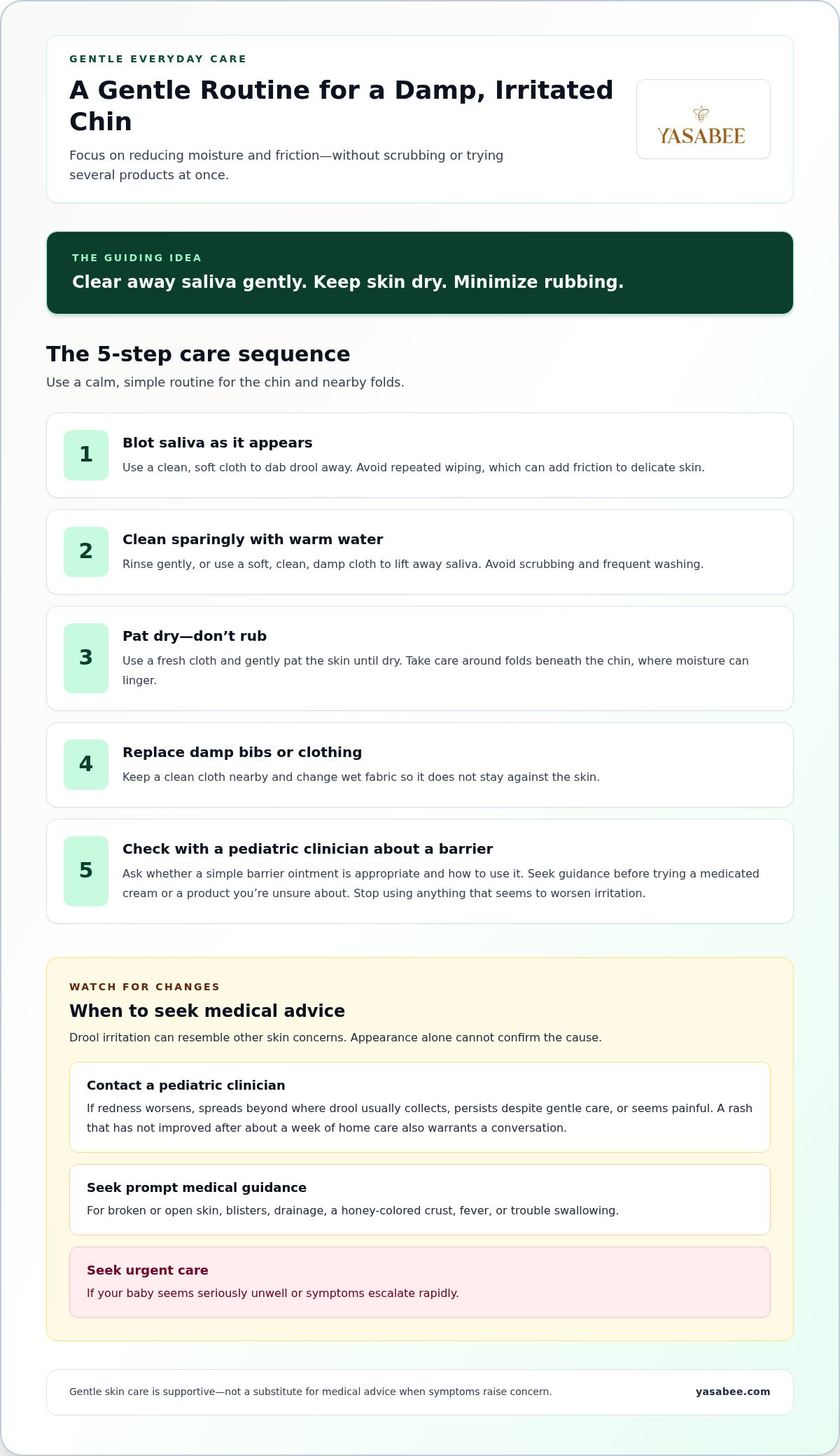
A simple routine can help limit moisture and friction. Gently rinse the area with warm water, or use a soft, clean, damp cloth to lift away saliva. Pat the skin dry with a fresh cloth instead of rubbing, taking care around folds beneath the chin. Dab drool as it appears, and change a damp bib or clothing so wet fabric does not stay against the skin.
- Clean gently: Use warm water and avoid scrubbing or frequent washing.
- Dry carefully: Pat the skin until it feels dry, including any nearby folds.
- Reduce dampness: Keep a clean cloth close by and replace wet bibs or clothing.
These steps focus on keeping irritated skin clean and dry without adding unnecessary rubbing. For more background on ways to treat existing drool rashes, Healthline discusses gentle care approaches, including protecting skin from ongoing moisture.
Should You Apply a Barrier Product to the Chin?
Ask a pediatric clinician whether a simple barrier ointment is appropriate for your baby and how to use it. Before trying a medicated cream or a product you’re unsure about, seek professional guidance. Stop using anything that seems to worsen the irritation, and ask a clinician what to do next. A baby drool rash chin remedy should suit your baby, rather than involve trying several products at once.
For general context on choosing everyday moisturizing care, explore this baby moisturizing lotion guide. It covers product selection, not treatment for a rash.
When Does Baby Drool Rash Need Medical Advice?
While keeping the skin gently clean and dry, pay attention to changes in the rash and your baby’s comfort. Contact a pediatric clinician if redness worsens, spreads beyond the area where drool usually collects, persists despite gentle care, or seems painful. Persistent or worsening infant rashes need individualized clinical advice.
What Changes Should Prompt a Call to the Pediatrician?
Ask for medical guidance if you notice broken skin, blisters, drainage, or areas that look open or weepy. A rash that hasn’t improved after about a week of home care also warrants a conversation with your baby’s clinician. Fever, trouble swallowing, or a honey-colored crust may need prompt assessment. Scripps Health offers further guidance on treating baby's drool rash.
- Call for advice: The rash is worsening, spreading, persistent, or causing significant discomfort.
- Seek prompt guidance: Skin is broken, blistered, or draining, or your baby has a fever or trouble swallowing.
- Seek urgent care: Your baby seems seriously unwell or symptoms escalate rapidly.
If you’re unsure, describe what you see and when it began to your child’s clinician. A baby drool rash chin remedy is a supportive care step, not a substitute for medical advice when symptoms raise concern. For everyday baby-care options, Yasabee’s baby-care collection includes a baby shampoo and body wash, baby lotion, body, hair and scalp oil, and grooming and oral-care items. Yasabee baby care features selected moisturizing ingredients, botanical oils and extracts; these products are for everyday care, not rash treatment.
Keep Chin Care Gentle and Know When to Reach Out
For a damp, irritated chin, start by gently clearing away saliva, patting the skin dry, and changing wet bibs or clothing. Redness and rough patches can have more than one cause, so seek a pediatric clinician’s advice if the rash worsens, persists, spreads, or causes significant discomfort. Broken skin, blisters, drainage, or a baby who seems unwell also deserve prompt attention.
A thoughtful baby drool rash chin remedy begins with managing moisture and friction, not trying multiple products at once. Yasabee offers everyday baby-care products, including lotion and body, hair and scalp oil featuring selected moisturizing ingredients, botanical oils and extracts. Explore Yasabee’s baby-care collection.
Frequently Asked Questions
Can drool rash on a baby’s chin clear up on its own?
Mild irritation may improve when the skin is kept gently clean and dry and repeated rubbing is reduced. However, a rash can have causes other than saliva, and appearance alone can’t confirm what it is. Contact your baby’s clinician if it worsens, persists, spreads, or causes notable discomfort, or if you’re unsure what you’re seeing.
What is the best home remedy for baby drool rash?
A gentle baby drool rash chin remedy begins with dabbing saliva away using a clean, soft cloth, rinsing the skin when needed, then patting it dry rather than rubbing. Change wet clothing or bibs so they don’t stay against the chin. Ask a pediatric clinician before using medicated creams or if you’re unsure what’s causing the rash.
Can I put lotion on my baby’s drool rash?
Whether lotion is suitable depends on your baby’s skin and the product’s ingredients. A moisturizer isn’t automatically a treatment for drool rash, so don’t assume it will clear the irritation. Ask your pediatric clinician what to apply, particularly if the skin is broken, the rash is worsening, or your baby seems uncomfortable.
When should I call a doctor about my baby’s chin rash?
Contact your baby’s clinician if the rash is getting worse, spreading, persistent, or causing significant discomfort. Seek prompt medical advice if you notice broken skin, blisters, or drainage, or your baby seems unwell. If symptoms change quickly or you’re worried about your baby’s condition, seek medical guidance rather than relying on home care alone.