

Baby Oil for Cradle Cap Prevention: What Parents Should Know
What if oil helps with cradle cap, but doesn’t prevent it? A little oil may soften and loosen scales that are already there, but baby oil for cradle cap prevention hasn’t been established as a way to stop flakes from forming. It’s understandable to look for a gentle scalp-care option when flakes become noticeable.
This guide explains what oil may help with, how to loosen flakes gently before washing the scalp, and what to check on a product label. It also covers when to contact your baby’s pediatric healthcare professional. A simple routine can help you care for your baby’s scalp without relying on oil as prevention.
Key Takeaways
- Baby oil for cradle cap prevention isn’t established; its possible role is softening existing flakes.
- Check the label and ask your pediatric healthcare professional whether a product is appropriate for your baby’s scalp.
- If oil is recommended, apply it gently and shampoo the scalp thoroughly as advised.
- Check the ingredients and directions for any product, including Yasabee Baby Body, Hair and Scalp Oil. Don’t assume it prevents or treats cradle cap.
Can baby oil prevent cradle cap, or only loosen existing flakes?
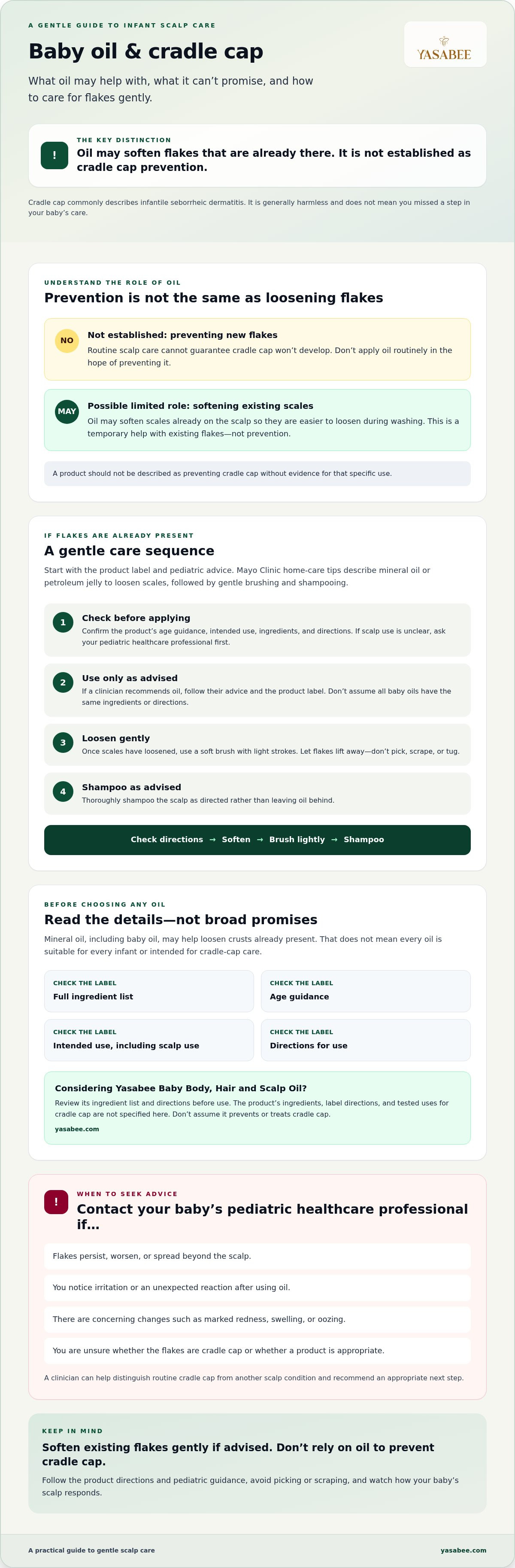
No, baby oil shouldn’t be presented as a proven way to prevent cradle cap. It may soften scales already on the scalp, making them easier to loosen, but that’s different from stopping new flakes from appearing. If you’re searching for baby oil for cradle cap prevention, keep this distinction in mind: softening existing scales is not prevention.
Cradle cap is commonly used to describe infantile seborrheic dermatitis, which can cause flaky or greasy scales on a baby’s scalp. It’s generally harmless and doesn’t mean you’ve missed a step in your baby’s care. If you’re unsure whether the flakes are cradle cap, ask your pediatric healthcare professional for guidance.
Prevention versus loosening existing scalp flakes
Routine scalp care means gently washing and caring for the scalp. It can’t guarantee that cradle cap won’t develop. Oil has a different, limited role: it may soften scales that are already present so they’re easier to lift away during washing. Pediatric guidance, including advice from the American Academy of Dermatology and Mayo Clinic, describes oil as a way to loosen existing scales, not as established prevention.
Prevention aims to stop a condition from developing; softening flakes temporarily makes existing scales easier to remove. These are different claims. A product shouldn’t be described as preventing cradle cap without evidence for that specific use. If flakes appear, follow current pediatric advice rather than applying oil routinely in the hope of preventing them.
How to use baby oil gently when your baby has scalp flakes
Start with the product label, rather than a home remedy you’ve seen online. Check whether the product is intended for your baby’s age and for scalp use. If the directions don’t clearly cover the scalp, or you’re unsure whether the flakes need care, ask your pediatric healthcare professional before applying anything. Baby oil for cradle cap prevention can be a misleading phrase: oil use in this context is for flakes already present, not a proven way to prevent them.
A gentle routine for flakes already present
Mayo Clinic’s home care tips describe using mineral oil or petroleum jelly to loosen scales, followed by gentle brushing and shampooing. If a clinician recommends oil for your baby, follow their advice and the product’s label. Don’t assume all baby oils have the same ingredients or directions. Shampoo the scalp thoroughly as advised rather than leaving oil behind.
In short: check the directions, use an appropriate product only if advised, gently brush loosened flakes, then shampoo as directed. Don’t pick, scrape, or tug at scales, as this can irritate the scalp. Once flakes have loosened, use a soft brush with light strokes. For more on choosing and using a brush gently, see this wooden baby brush and comb set guide.
If you’re considering Yasabee Baby Body, Hair and Scalp Oil, check its ingredient list and directions before use. The product’s ingredients and use for cradle cap aren’t specified here. Explore Yasabee baby care and review the product details as you consider your options.
Choosing baby oil for cradle cap: ingredients, limits, and next steps
Choose based on the label, not broad promises such as “gentle” or “natural.” Before considering baby oil for cradle cap prevention, remember that oil hasn’t been established as a way to prevent the condition. The Better Health Channel explains that mineral oil, including baby oil, may help loosen the crusts already present. That guidance doesn’t mean every oil is suitable for every infant or intended for cradle-cap care.
What to check before applying any oil to an infant's scalp
Read the full ingredient list, age guidance, intended use, and directions. If scalp use isn’t specified, ask your pediatric healthcare professional before applying the product. Yasabee Baby Body, Hair and Scalp Oil is available, but its ingredients, label directions, and tested uses aren’t specified here. Check the product information, and don’t assume it prevents or treats cradle cap.
Stop using an oil if you notice irritation or an unexpected reaction, and contact a healthcare professional for advice. Seek pediatric guidance if the flakes persist, worsen, spread beyond the scalp, or come with concerning changes such as marked redness, swelling, or oozing. A clinician can help distinguish routine cradle cap from another scalp condition and recommend an appropriate next step.
Make your decision using clear product details and your baby’s individual needs. Review the ingredient list and directions for any oil you’re considering, and ask your pediatric healthcare professional if anything is unclear.
Choose a gentle next step for your baby’s scalp
Oil may help loosen flakes that are already present, but baby oil for cradle cap prevention isn’t a proven way to stop cradle cap from developing. If you choose to use oil, check its ingredient list and directions, and follow pediatric guidance. Let loosened scales lift away without picking or scraping.
Watch how your baby’s scalp responds. If flakes persist, worsen, spread, or come with irritation or other concerning changes, contact your pediatric healthcare professional. Remember, a product’s name alone doesn’t confirm that it’s intended for cradle-cap care.
Yasabee Baby Body, Hair and Scalp Oil is part of Yasabee’s baby care range. Before considering it for your infant’s scalp, review the product label for ingredients, directions, and intended uses. Explore Yasabee Baby Body, Hair and Scalp Oil and check its product details before deciding whether it suits your needs.
Frequently Asked Questions
Can baby oil prevent cradle cap?
No, baby oil hasn’t been established as a way to prevent cradle cap. It may help soften or loosen flakes that are already present, which is different from stopping them from forming. Think of oil as a possible part of care for existing scales, not a preventive step. Ask your pediatric healthcare professional if you’re unsure what’s appropriate for your baby.
Is baby oil safe to use on a baby's scalp?
It depends on the product and your baby, so don’t assume every oil is suitable for scalp use. Check the ingredient list, age guidance, and label directions, and ask a pediatric healthcare professional if the intended use isn’t clear. Yasabee Baby Body, Hair and Scalp Oil is available, but its ingredients and cradle-cap uses aren’t specified here.
How do you use oil for cradle cap?
If a pediatric professional recommends oil, follow their guidance and the product directions. Apply it gently to the affected area, allow scales to soften as advised, then use a soft brush only to lift loosened flakes and shampoo the scalp thoroughly. Don’t pick, scrape, or tug at scales, and don’t leave oil on the scalp unless a clinician specifically advises it.
When should I ask a doctor about my baby's cradle cap?
Contact your baby’s healthcare professional if the flakes persist, worsen, spread beyond the scalp, or come with marked redness, swelling, oozing, or other changes that concern you. A clinician can check whether the symptoms are consistent with cradle cap and suggest appropriate care. If you’re uncertain before trying an oil or other product, ask first.