

Daily Baby Shampoo: A Gentle, Thoughtful Bath-Time Guide
A bath every day doesn’t have to mean a shampoo every day. If you’re wondering whether daily baby shampoo is right for your little one, you’re not alone. Frequent washing can feel like a thoughtful way to keep baby fresh, but delicate hair and scalp may need a gentler rhythm. The American Academy of Pediatrics recommends bathing babies no more than three times a week during their first year.
Let your baby’s needs guide shampooing rather than automatically washing hair at every bath. This guide covers when more frequent washing may make sense, how to cleanse delicate hair gently, and what to look for on a baby shampoo label. It also introduces Yasabee Baby Shampoo & Body Wash, thoughtfully formulated baby care featuring selected moisturizing ingredients, botanical oils and extracts.
Key Takeaways
- Daily baby shampoo is an option, not a fixed rule. Let your baby’s hair, scalp, activity, and routine guide your approach.
- Make washing calmer by preparing first, wetting hair gently, using a small amount, and rinsing thoroughly.
- Read the product label to understand the ingredients and how the formula is intended to be used.
- Yasabee Baby Shampoo & Body Wash features selected moisturizing ingredients, botanical oils and extracts.
Daily Baby Shampoo: Does Your Baby Need Hair Washing Every Day?
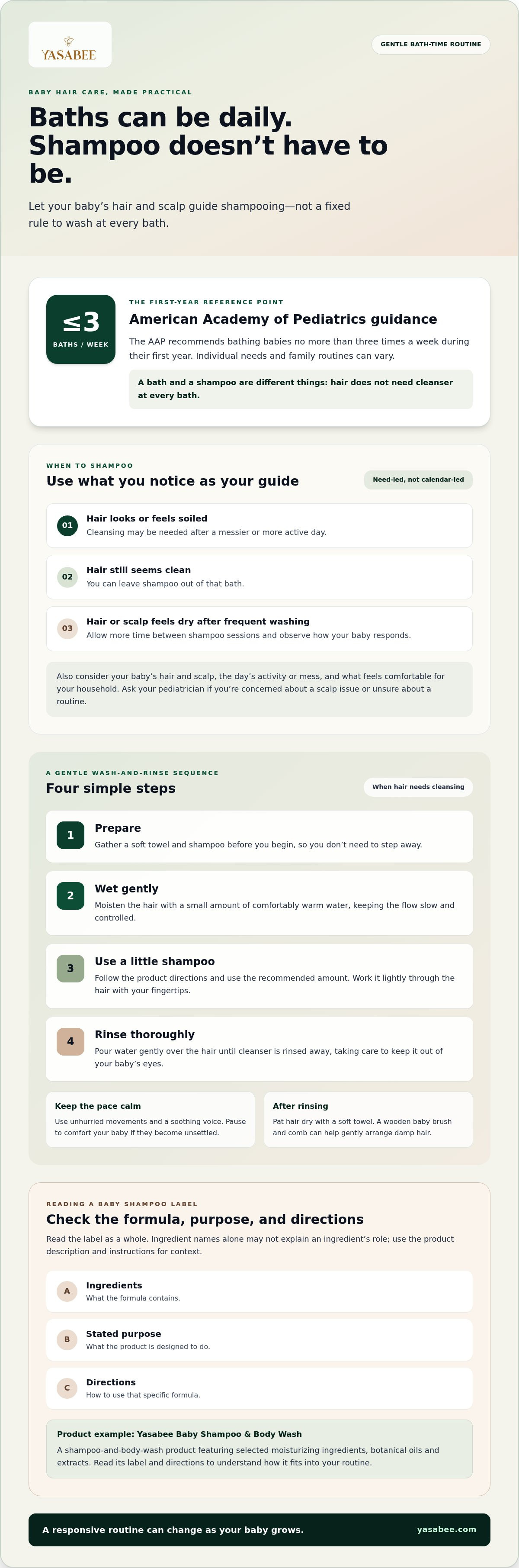
Daily shampooing isn’t necessary for every baby. A bath and a shampoo serve different purposes: your baby can have a bath without having their hair washed with cleanser each time. The American Academy of Pediatrics recommends bathing babies no more than three times a week during their first year, though individual needs and family routines can vary. For broader context on bathing and newborn care and safety, consider how washing fits into your baby’s overall routine.
How often should you shampoo a baby's hair?
Decide based on what you notice, rather than treating shampoo as a required part of every bath. Hair that looks or feels soiled may need cleansing; hair that still seems clean may not. Consider your baby’s hair and scalp, how active or messy the day has been, and what feels comfortable for your household. If frequent washing seems to leave the hair or scalp feeling dry, leave more time between shampoo sessions and observe how your baby responds.
Daily baths don’t mean daily shampoo. You can keep bath time in your daily rhythm and use shampoo only when your baby’s hair needs cleansing. This gives you room to adjust on days with more spills, sweat, or outdoor play.
There isn’t one schedule that suits every baby. Choose a gentle, practical rhythm and adjust it as your baby’s needs change. If you’re concerned about a scalp issue or unsure which routine is right for your child, ask your pediatrician for guidance. Daily baby shampoo is not a calendar requirement. Use it when cleansing is needed, rather than making it an automatic step.
How to Use Daily Baby Shampoo in a Gentle Bath-Time Routine
A calm wash is less about making shampoo a daily habit and more about using it thoughtfully when your baby’s hair needs cleansing. Prepare everything first so you can keep one steady, reassuring hand with your baby. The infant skin care guidelines offer broader context for gentle bathing and caring for delicate skin.
A simple wash-and-rinse sequence for delicate baby hair
- Prepare. Gather a soft towel and your chosen shampoo before you begin, so you don’t need to step away.
- Wet gently. Use a small amount of comfortably warm water to moisten the hair, keeping the flow slow and controlled.
- Use a little shampoo. Follow the product’s directions and apply the recommended amount. Work it lightly through the hair with your fingertips rather than rubbing briskly.
- Rinse thoroughly. Pour water gently over the hair until the cleanser is rinsed away, taking care to keep it out of your baby’s eyes.
Keep your movements unhurried and your voice soothing. If your baby becomes unsettled, pause to comfort them rather than rushing through the steps. After rinsing, pat the hair dry with a soft towel. Post-bath grooming can be simple too: a wooden baby brush and comb can help you gently arrange damp hair.
Use daily baby shampoo when it suits your baby’s needs. Shampoo doesn’t have to be an automatic part of every bath. Follow the directions for the specific product you use, and don’t treat shampoo as a remedy for a scalp concern. For a shampoo-and-body-wash option in your routine, explore Yasabee Baby Shampoo & Body Wash.
Choosing Daily Baby Shampoo: Read the Formula and Consider Yasabee
A product label can help you understand what a shampoo is designed to do and how to use it. Read the ingredient list alongside the product description and directions, rather than relying on broad claims. The ingredients show what the formula contains, while the stated purpose and instructions explain how it is meant to fit into bath time.
What to look for in a baby shampoo label
Read the label as a whole. Check the listed ingredients, the product’s stated purpose, and its directions for use. If an ingredient is unfamiliar, don’t guess at its role based on its name alone. Look for an explanation in the product description and follow the directions for that specific formula. This helps you compare products using practical details, without assuming every baby shampoo works in the same way.
Yasabee Baby Shampoo & Body Wash is thoughtfully formulated baby care featuring selected moisturizing ingredients, botanical oils and extracts. It combines shampoo and body wash in one bath-time product. Read its label and directions to understand how to use it in your routine.
Daily baby shampoo doesn’t need to be an automatic choice. Use the label to understand the formula, then decide whether shampoo fits your baby’s needs and your routine. Baby lotion can be a separate step after bathing; explore the baby moisturizing lotion guide for more on that topic.
Let Your Baby’s Needs Shape the Routine
Bath-time needs may shift as your baby grows, so revisit a routine that no longer seems to fit. Pay attention to what you notice and let the need for cleansing, rather than a fixed expectation, guide your choices. Using daily baby shampoo is a choice, not a measure of how carefully you care for your child.
For a shampoo-and-body-wash option, Yasabee Baby Shampoo & Body Wash features selected moisturizing ingredients, botanical oils and extracts. Follow the product label and directions, and adjust your routine as your baby’s hair and scalp needs change. Explore Yasabee Baby Shampoo & Body Wash.
There’s no need to make every bath perfect. A calm, responsive rhythm is a good place to begin, and you can adjust it as your little one grows.
Frequently Asked Questions
Can I use baby shampoo every day?
Not necessarily. Daily baby shampoo isn’t a default requirement for every infant. During the first four to six weeks, plain water is often sufficient for washing, while later needs can vary. If your baby’s hair is clean and your pediatrician hasn’t given specific care guidance, you can skip shampoo. Follow your clinician’s advice if they recommend a particular routine.
Is daily baby shampoo too drying for a baby's hair?
It can leave some babies’ hair or scalp feeling dry, especially if cleanser is used more often than needed. Pay attention to changes after washing, such as hair feeling unusually rough or the scalp looking persistently dry or irritated. If you notice ongoing irritation, pause the product and ask your pediatrician for guidance rather than trying to treat the concern with shampoo.
How do you wash a baby's hair with shampoo?
Keep your baby’s head supported and use a small cup or your hand to control the water, rather than directing a strong stream over the face. Apply shampoo gently with your fingertips and avoid scrubbing. Rinse until the hair no longer feels slippery, then pat it dry. Follow the specific product’s instructions, since directions can differ.
What should I look for in a daily baby shampoo?
Choose a product intended for babies, then read its ingredient list, directions, and any label cautions. Look for descriptions that explain what the ingredients are included to do, and consider whether the formula suits your child’s known sensitivities. If your baby has a persistent scalp concern or a history of reactions, ask your pediatrician which type of cleanser is appropriate.