

How Often to Bathe a Newborn: A Gentle, Practical Guide
What if your newborn needs fewer baths than you expected? For most babies, how often to bathe a newborn comes down to two or three times a week, not a daily soak. Between baths, a warm, damp cloth can freshen the face, neck, hands, and diaper area. It’s understandable to wonder whether you’re doing enough, especially while the umbilical cord stump is still healing.
A simple routine can help: keep baths brief, use comfortably warm water, and give sponge baths until the stump falls off. This guide covers a practical bathing rhythm, gentle steps for bath time, and when to adjust for messes or your baby’s needs. It also explains when individualized advice from your baby’s pediatrician may help, so you can care for your newborn with less guesswork.
Key Takeaways
- Knowing how often to bathe a newborn can make the routine feel simpler: a full bath doesn’t need to be part of every day.
- Prepare towels and supplies before starting, support your baby throughout, and keep one hand on them at all times. Never leave a baby alone in water.
- Keep bath time calm and brief. Wash gently, rinse if needed, then dry your baby promptly and keep them warm.
- Adapt bath timing to your baby’s comfort and everyday messes. Persistent dryness, irritation, or other skin concerns are good reasons to ask your pediatrician for individualized guidance.
How often to bathe a newborn: what most families need to know
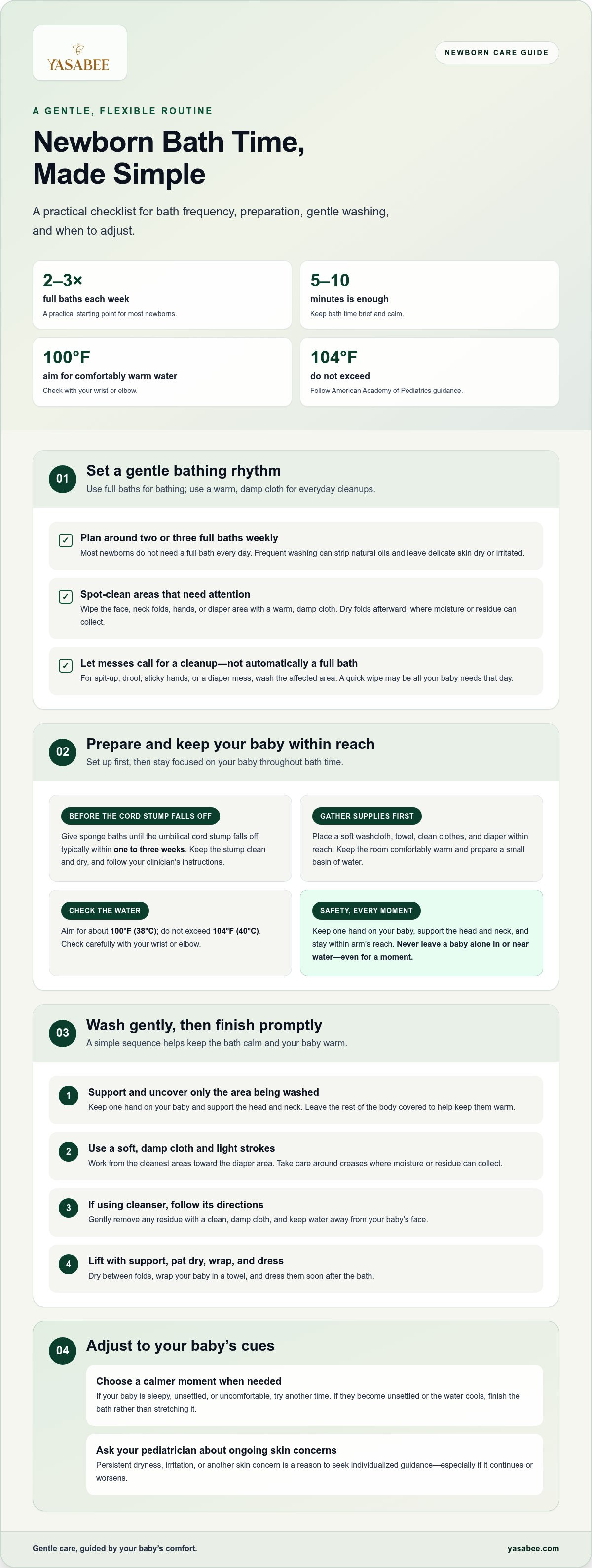
Most newborns don’t need a full bath every day. The American Academy of Pediatrics (AAP) says bathing about three times a week is often enough, so two or three full baths weekly is a practical starting point. Frequent washing can strip away a newborn’s natural oils and leave delicate skin dry or irritated.
You don’t have to wait for bath night to clean a mess. Gently wipe away spit-up around the chin, drool in the neck folds, sticky hands, or a soiled diaper area with a warm, damp cloth. Dry the folds afterward, since moisture and residue can collect there. Spot-cleaning keeps your baby comfortable without turning every small spill into a full bath.
Full baths and spot-cleaning serve different purposes
A full bath means washing your baby’s body, while spot-cleaning focuses on the areas that need attention, such as the face, neck folds, hands, or diaper area. On quieter days, a quick wipe may be all your baby needs. If you choose to moisturize after a bath, explore this baby moisturizing lotion guide for more information.
Let your baby’s comfort and daily routine shape the schedule rather than following a rigid calendar. If a diaper blowout or another mess calls for extra cleaning, wash the affected area; a full bath isn’t automatically needed. For a broader overview of hygiene within newborn care guidelines, use that information alongside your pediatrician’s advice for your baby.
How to bathe a newborn gently and safely, step by step
A little preparation makes bath time calmer and safer. The American Academy of Pediatrics recommends sponge baths until the umbilical cord stump falls off, typically within one to three weeks. Keep the stump clean and dry, and follow your baby’s clinician’s instructions if you’ve been given individualized guidance.
Keep the bath brief, prepared, and within reach
Gather everything before you begin, including a soft washcloth, towel, clean clothes, and diaper. Keep the room comfortably warm, check the water temperature, and stay within arm’s reach throughout the bath. Never leave a baby alone in or near water, even for a moment.
- Prepare the space. Set supplies within reach and fill a small basin with comfortably warm water. Aim for about 100°F (38°C), and don’t exceed 104°F (40°C), following the American Academy of Pediatrics’ guidance. Check carefully with your wrist or elbow.
- Support your baby. Keep one hand on your baby and support the head and neck. Undress only the area you’re washing so the rest of the body stays warm.
- Wash gently. Use a soft, damp cloth and light strokes. Work from the cleanest areas toward the diaper area, taking care around creases where moisture or residue can collect.
- Rinse if needed. If you use a cleanser, follow its directions and gently remove residue with a clean, damp cloth. Keep water away from your baby’s face.
- Dry promptly. Lift your baby out while maintaining support, then pat the skin dry, including between folds. Wrap your baby in a towel and dress them soon after.
Keep the bath short. The American Academy of Pediatrics notes that 5 to 10 minutes is enough. If your baby becomes unsettled or the water cools, finish up rather than stretching the bath. For concerns about the cord area, water temperature, or your baby’s skin, ask your pediatrician for individualized advice.
When to adjust newborn bath frequency or ask for guidance
Your baby’s routine can shift from day to day. If your newborn is sleepy, unsettled, or uncomfortable with a bath, choose a calmer time instead of treating the schedule as a rule. After a messy feed or diaper change, clean only the area that needs attention. Let your baby’s comfort and skin help guide the routine.
Notice how your baby’s skin looks and feels over time. Persistent dryness, irritation, or another skin concern is a reason to ask your pediatrician for individualized advice. A clinician can help you consider whether bathing or other care should be adjusted. Avoid trying to diagnose the cause yourself, especially if the concern continues or worsens.
Make bath time a calm part of your newborn’s care
A flexible routine can feel gentler than aiming for a bath every day. Choose a moment when you can be unhurried, and pause if your baby seems uncomfortable. After bathing, keep grooming gentle and brief; the wooden grooming set for infants offers one option for a simple post-bath routine.
As you learn your baby’s cues, you can shape a rhythm that feels comfortable for your family. Yasabee’s baby care range includes thoughtfully formulated care featuring selected moisturizing ingredients, botanical oils, and extracts. Explore Yasabee baby care.
Let your bathing routine grow with your baby
Your baby’s preferences will unfold with time, and your routine can change alongside them. As you decide how often to bathe a newborn, leave room for quieter days and the unexpected rhythms of family life. Bath time doesn’t need to become a measure of how well you’re doing. Trust grows through the small, attentive moments you share each day.
As your baby grows, familiar routines may shift, and you can keep choosing what feels comfortable for your family. If you’re gathering thoughtful essentials for your baby’s care, explore Yasabee baby care. Take each new stage at your own pace, one day at a time.
Frequently Asked Questions
Can I bathe my newborn after a feeding?
Yes, but a bath doesn’t need to follow a strict feeding timetable. For a calmer moment, wait until your baby seems settled and you can focus fully on them. If they seem uncomfortable after feeding, give them time before bathing. Watch their cues, and pause or end the bath if they become distressed.
What temperature should newborn bath water be?
Aim for water around 100°F (38°C), and never let it exceed 104°F (40°C), following American Academy of Pediatrics guidance. Check the temperature before your baby goes into the water, using your wrist or elbow to make sure it feels warm, not hot. Don’t rely only on your hand, which may be less sensitive to heat.
Does a newborn need soap at every bath?
No, a cleanser isn’t necessary over your baby’s whole body at every bath. Use one only when it suits the area being washed, and follow the product’s directions. Check the label for its intended use and ingredients, especially if your baby has a known skin concern. Ask your pediatrician for advice about persistent irritation or a skin condition.
What should I do if my newborn’s skin looks dry after a bath?
Keep the next wash gentle, and note where the dryness appears and whether it changes. If you’re wondering how often to bathe a newborn after noticing dry skin, avoid increasing baths in response. Dryness can have different causes; ask your pediatrician for individualized advice if it continues, worsens, or seems uncomfortable for your baby.