

Natural Remedies for Baby Heat Rash: A Gentle Care Guide
A rich cream may seem like the gentlest answer, but heavier products can trap sweat against delicate skin. Even if your routine includes a silicone finger toothbrush for babies, heat rash calls for a different kind of care: cooling, light layers, and patience.
It’s understandable to worry that a remedy could make a rash worse, or that the bumps might have another cause. This guide explains practical ways to help your baby feel cooler and more comfortable, why some products may not be suitable without professional advice, and which signs call for a pediatrician’s guidance. You’ll also learn what heat rash can look like and how to observe changes while keeping your baby’s comfort at the center.
Key Takeaways
- Heat rash can happen when sweat ducts become blocked, but bumps alone can’t confirm what’s causing your baby’s skin changes.
- Help your baby cool down by moving to a cooler space, removing extra layers, and choosing breathable clothing.
- Keep irritated skin clean and dry, and avoid rubbing it or applying heavy creams that may trap sweat.
- Keep routine care items, such as a silicone finger toothbrush for babies, separate from rash care. Contact your pediatrician if the rash worsens, your baby develops a fever, or it persists beyond three days.
What causes baby heat rash, and what does it look like?
Heat rash, also called miliaria, can develop when sweat becomes trapped beneath the skin because sweat ducts are blocked. Babies may be more prone to it while their sweat ducts are still developing, especially in warm conditions or where skin stays covered. The Miliaria (heat rash) overview describes several forms, which can look different.
Heat rash may appear as tiny clear bumps or blisters, or as clusters of red, sometimes itchy spots. It can develop in areas that become warm or sweaty, such as the neck, upper chest, skin folds, or beneath clothing. These signs can offer clues, but appearance alone can’t confirm the cause. Several infant skin conditions can look similar, so a description or photograph can’t replace a clinician’s assessment.
How can caregivers tell heat rash from a reason to seek advice?
It can be difficult to distinguish heat rash from other skin concerns at home. Notice whether the rash is changing, spreading, or causing unusual discomfort, and contact your pediatrician if you’re unsure or concerned. Seek medical advice promptly if your baby has a fever, the rash appears infected or has pus, or it spreads quickly. A silicone finger toothbrush for babies is for oral care, not for inspecting or soothing a rash, so keep the two routines separate.
How to soothe baby heat rash gently at home
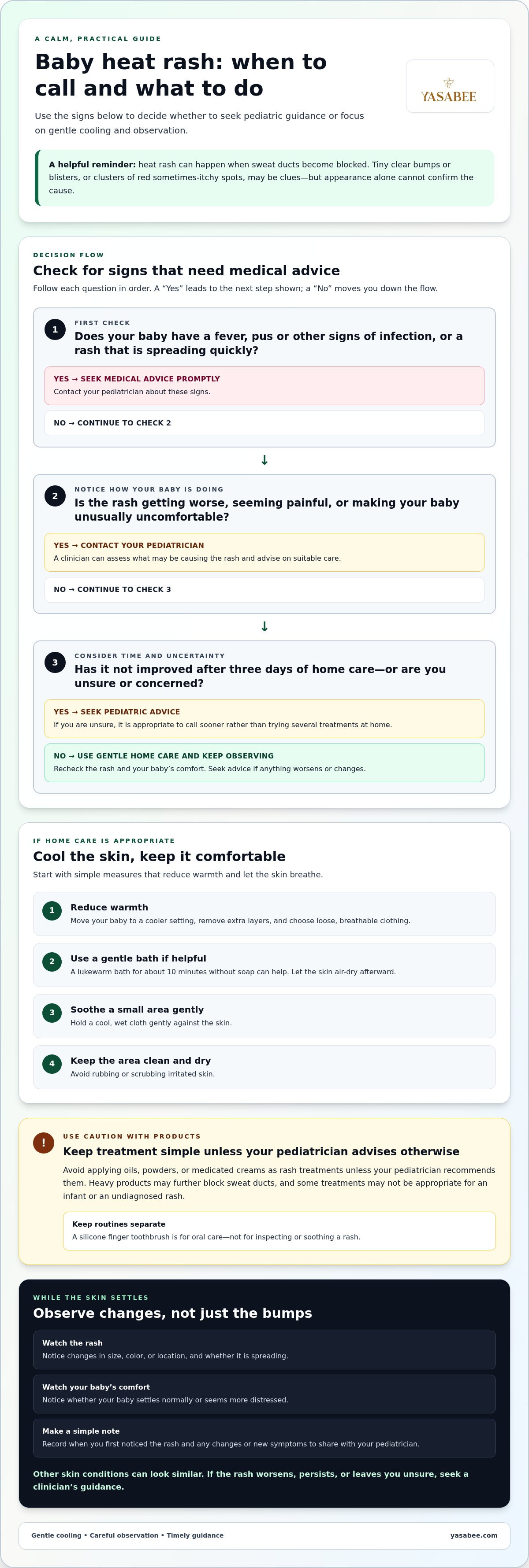
Start by reducing warmth and letting the skin breathe. Move your baby to a cooler setting, remove extra layers, and choose loose, breathable clothing. A lukewarm bath for about 10 minutes without soap, followed by air-drying, can help. For a small area, hold a cool, wet cloth gently against the skin. Keep the area clean and dry, and avoid rubbing or scrubbing.
These simple measures cool the skin while limiting further irritation. For more guidance on treating heat rash, Nemours KidsHealth also explains home care and when to seek medical advice.
Which home remedies and products should caregivers approach cautiously?
Avoid applying oils, powders, or medicated creams as rash treatments unless your pediatrician recommends them. Heavy products may further block sweat ducts, and some treatments may not be appropriate for an infant or an undiagnosed rash. If you’re unsure, keep care simple and ask your pediatrician before applying something new.
For broader everyday-care context, read this newborn skincare routine guide. A silicone finger toothbrush for babies belongs in a separate oral-care routine, not as a tool or treatment for irritated skin.
When should you call a pediatrician about baby heat rash?
Pay attention to how your baby is doing overall. Contact your pediatrician if the rash is getting worse, spreading quickly, seems painful, or is making your baby unusually uncomfortable. Call if you notice pus or other signs the rash may be infected, or if your baby develops a fever. If the rash hasn’t improved after three days of home care, seek medical advice. These signs don’t necessarily mean something serious is happening, but they warrant a clinician’s guidance.
If you’re uncertain whether the bumps are heat rash, or the symptoms concern you, it’s appropriate to call sooner rather than trying several treatments at home. A pediatrician can assess what may be causing the rash and advise on suitable care.
What should you observe while your baby’s skin settles?
Notice whether the rash changes in size, color, or location, and whether your baby seems comfortable, settles normally, or appears more distressed. You can note when you first noticed it and record any changes or new symptoms to share with the pediatrician. There’s no need to predict a recovery timeline. Seek advice if the rash worsens, persists, or leaves you unsure.
With gentle observation and timely guidance, you can care for your baby without having to solve every skin concern alone. Keep everyday routines distinct: a silicone finger toothbrush for babies is for oral care, not a rash remedy. For general baby-care essentials, explore Yasabee’s baby-care collection.
Keep your baby comfortable with calm, gentle care
Heat rash can be unsettling, but simple steps can help: ease excess warmth, let the skin breathe, and avoid scrubbing or applying treatments without pediatric guidance. Since other skin concerns can look similar, trust your instincts and call your pediatrician if the rash worsens, persists, your baby develops a fever, or you’re unsure what you’re seeing.
Keep everyday care gentle and purposeful. A silicone finger toothbrush for babies belongs in an oral-care routine, while heat rash calls for cooling and careful observation. Yasabee’s baby-care essentials are for everyday routines, not as remedies for a rash. To explore thoughtfully curated items for your baby’s care routine, visit Yasabee’s baby-care collection.
Frequently Asked Questions
What is the safest natural remedy for baby heat rash?
Start with gentle comfort measures rather than an unverified remedy: help your baby cool down, remove extra layers, and keep the affected skin clean and dry. Avoid applying oils, powders, or medicated products as treatment unless your pediatrician recommends them. A silicone finger toothbrush for babies is for oral care, not rash care. If you’re unsure about the rash or your baby seems unwell, seek medical advice.
Can I put lotion or oil on my baby’s heat rash?
Don’t assume lotion or oil will soothe heat rash. Products may not suit irritated or heat-affected skin, and heavier products can contribute to blocked pores. Keep the area comfortable and avoid adding products as treatment without pediatric guidance. If the rash is worsening, persists beyond three days despite home care, or is difficult to identify, ask your baby’s pediatrician for advice.
How can I help prevent baby heat rash?
Reduce overheating by dressing your baby in breathable layers suited to the surroundings and avoiding unnecessary bundling. Keep skin folds as comfortable and dry as practical, including after bathing or feeding, and change damp clothing. These steps may help limit excess heat and moisture, but they can’t guarantee prevention. If rashes recur or you’re concerned, ask your pediatrician for guidance.
When should I call a doctor about my baby’s heat rash?
Contact your baby’s pediatrician if the rash worsens, spreads quickly, seems painful, or hasn’t improved after three days of home care. Seek medical advice if you notice pus or other signs of infection, or if your baby develops a fever or seems unusually uncomfortable. Call sooner if you’re unsure what’s causing the rash. Appearance alone can’t confirm a diagnosis.