

Natural Wood Baby Comb: A Thoughtful Buying Guide
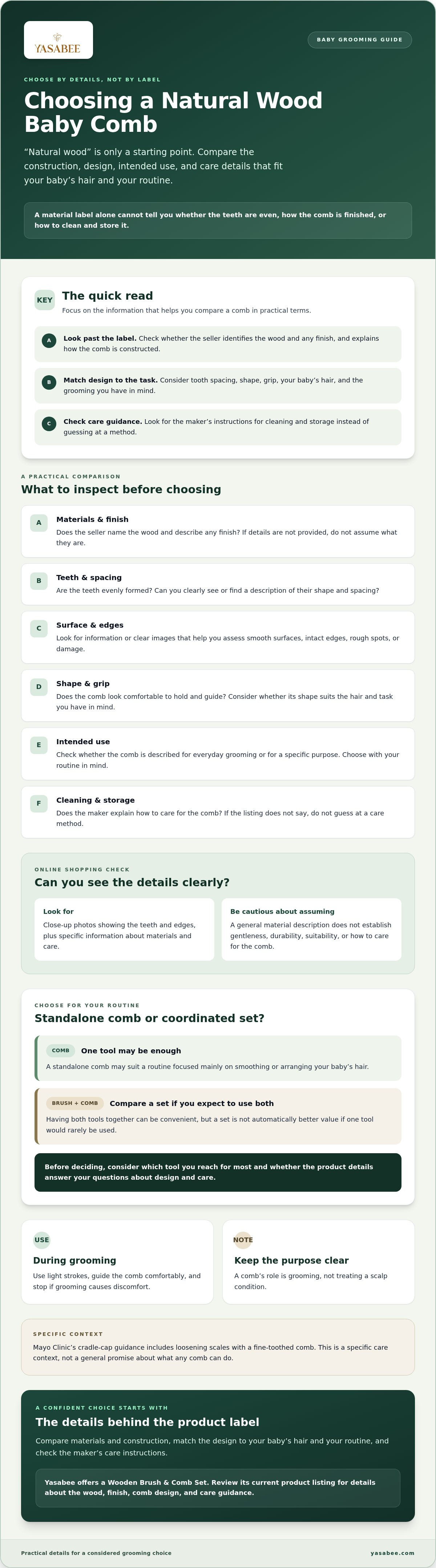
The words “natural wood” can sound reassuring, but they don’t tell you whether a comb’s teeth are smooth, how it’s finished, or whether its shape suits your baby’s hair. Choosing a natural wood baby comb means looking beyond the label and checking the details that affect how you’ll use and care for it.
To compare options, look for clear information about materials, construction, design, intended use, and care. Consider your baby’s hair and the grooming tasks you have in mind, then check whether the product details help you make a confident choice. Yasabee offers a Wooden Brush & Comb Set for shoppers considering coordinated grooming tools. Review the product listing for details about its material, design, and care before deciding whether it suits your routine.
Key Takeaways
- Look beyond the “natural wood” label and compare the construction details the seller provides.
- Choose a natural wood baby comb with a design suited to your baby’s hair and the grooming routine you have in mind.
- Check the tooth shape, edges, grip, intended use, and care instructions before you buy.
- Decide whether a standalone comb meets your needs or whether you would use both tools in a coordinated brush-and-comb set.
What to Look for in a Natural Wood Baby Comb
A natural wood baby comb is a grooming tool whose body or teeth are described as wood. That description is only a starting point. It doesn’t tell you how the comb is finished, whether the teeth are even, or whether its shape suits your baby’s hair. Combs have been used since prehistoric times, but a tool’s long history doesn’t answer the practical questions to consider when choosing one today.
Check whether the seller identifies the wood and any finish, and look for clear details about how the comb is constructed. Smooth surfaces, intact edges, and evenly formed teeth are useful features to assess. Consider whether the tooth spacing and overall shape suit the grooming task you have in mind. If you’re shopping online, product photos should show the teeth and edges clearly, and the description should address materials and care. A material label alone cannot establish a product’s suitability for a baby.
Does “natural wood” tell you enough about a baby comb?
Not by itself. Check whether the seller names the wood and describes any finish. If those details aren’t provided, don’t assume what they are. The label alone doesn’t establish gentleness, durability, or suitability, and it doesn’t explain how to clean or store the comb.
Wood isn’t automatically the right choice for every baby. Consider your child’s hair, the comb’s construction, and how you plan to use it. If you can examine the comb, check for rough spots, uneven teeth, or damage. When buying online, look for clear close-up images and specific product details rather than relying on a general material description. Yasabee offers a Wooden Brush & Comb Set; review its product listing for the wood, finish, comb design, and care guidance before deciding.
How to Compare Baby Comb Design, Fit, and Care
Compare the features that affect how a comb feels in your hand and suits your baby’s hair, rather than searching for one universal design. Tooth spacing, shape, and grip can make one option more practical for your routine than another. Choose a comb you can guide comfortably, use light strokes, and stop if the grooming causes discomfort. A comb’s role is grooming, not treating a scalp condition.
| Detail | What to check |
|---|---|
| Materials | Are the wood and any finish clearly identified? |
| Tooth shape | Are the teeth and their spacing clearly shown or described? |
| Edges | Do product details or images indicate smooth, intact edges? |
| Grip | Does the shape look comfortable to hold and guide? |
| Care | Does the maker explain cleaning and storage? |
Which comb details should parents check before buying?
Match the design to the hair and task. Consider whether the teeth seem suited to your baby’s hair and whether the comb is described for everyday grooming or a specific purpose. Mayo Clinic’s cradle-cap guidance includes loosening scales with a fine-toothed comb. This is a specific care context, not a general promise about what any comb can do.
Before buying, check the wood and finish, tooth shape and spacing, edge condition, grip, intended use, and the maker’s cleaning and storage instructions. Don’t guess at a care method if the listing doesn’t explain one. For more context when comparing coordinated tools, see this wooden baby brush and comb set guide. Yasabee offers a Wooden Brush & Comb Set; review the product listing to see whether its details fit your needs.
Choosing a Natural Wood Baby Comb or a Brush-and-Comb Set
Let your household’s grooming routine guide your choice. A standalone natural wood baby comb may be enough if you mainly want one tool for smoothing or arranging your baby’s hair. A coordinated set is worth comparing if you expect to use both a brush and a comb. Having both together can be convenient, but it isn’t automatically better value if one tool would rarely be used. Before choosing, consider which tool you reach for most and whether the set’s product details answer your questions about design and care.
When is a brush-and-comb set worth considering?
Start by identifying the grooming task, then compare the disclosed features of each tool and check the care instructions. Think about how your baby’s hair is usually groomed and which tool you expect to use. For broader context on selecting coordinated tools, read this essential wooden grooming set guide.
Yasabee offers a Wooden Brush & Comb Set for families comparing a coordinated option. Review the current listing for details about the wood, finish, comb design, and care instructions, and decide whether the set fits your routine. For general newborn grooming context, Happiest Baby shares gentle hair care for babies.
A little comparison can make the choice clearer. If you’re considering a set, explore Yasabee’s baby products and review the current product details before deciding what suits your family’s routine.
Choose a Grooming Tool with Confidence
A thoughtful choice starts with the product details, not the label. Compare the disclosed materials and construction, consider whether the design suits your baby’s hair and your grooming routine, and check the maker’s care instructions before purchasing. A natural wood baby comb may suit your needs, but choosing a standalone tool or a coordinated set depends on which items your family will actually use.
Yasabee offers a Wooden Brush & Comb Set among its baby products. Review the product listing for details about the wood, finish, design, and care method before deciding. Careful comparison can make it easier to choose tools that fit your routine. Explore Yasabee’s baby care collection and review the current product details to find an option that suits your family.
Frequently Asked Questions
Are natural wood baby combs suitable for newborns?
A natural wood baby comb may suit a newborn only if the specific product is intended for that age and its design fits your grooming needs. Check the maker’s age guidance and product details rather than relying on the wood label. If your newborn has a scalp concern or you’re unsure about combing, ask a pediatric clinician for individual advice.
Is a wooden baby comb better than a plastic comb?
Neither material is universally better. Compare each comb’s disclosed construction, design, and care guidance. Look at the teeth, edges, and grip, then consider which tool suits your baby’s hair and your grooming routine. Clear product information is useful for either material; an undisclosed finish or unclear cleaning instructions may leave important questions unanswered.
How should I clean and care for a wooden baby comb?
Follow the manufacturer’s cleaning and storage instructions, since care can vary by product and finish. Don’t assume a wooden comb should be soaked, wiped with a particular cleaner, or stored in a specific way unless the maker says so. If the listing doesn’t explain care, contact the seller or manufacturer for instructions before cleaning the comb.
What should I check before buying a natural wood baby comb?
Check whether the seller identifies the wood and finish, clearly describes the tooth design, and provides information about smooth, intact edges. Consider whether the comb’s shape suits your baby’s hair and your intended grooming routine. Confirm the maker’s cleaning and storage guidance, too. If key details aren’t provided, ask before deciding rather than filling in the gaps yourself.